
By Expert Appliance Editorial Team · Updated 2026-07-17
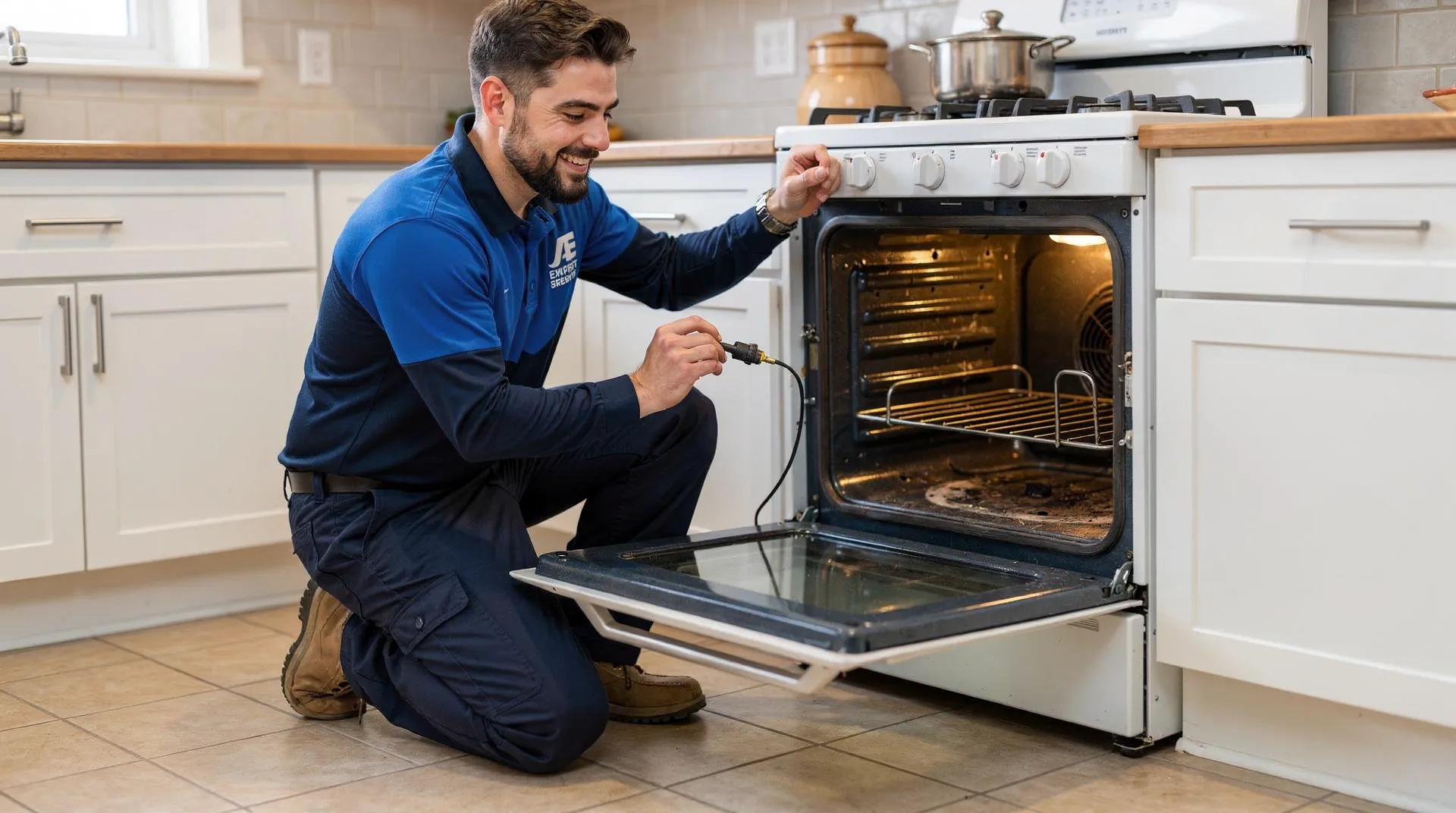
For Oven Not Heating Troubleshooting Tips, faulty heating elements, malfunctioning temperature sensors, damaged igniters (in gas ovens), tripped circuit breakers. Convection fan problems rank among the top reasons Toronto ovens fail to heat properly. With most issues traceable to a small number of electrical, gas. Temperature-related faults that Expert Appliance technicians in Toronto diagnose through basic troubleshooting.
Oven heating failures in Toronto trace to a defined set of mechanical causes. Faulty bake or broil elements, a miscalibrated temperature sensor, a defective igniter in gas models, control board malfunctions. Convection fan failures each disrupt consistent heat. Prompt professional diagnosis prevents further damage and restores reliable oven performance.
Key Takeaways
- Power supply and circuit breaker issues cause the majority of oven heating failures in Toronto homes.
- Damaged heating elements account for 1 of the 10 most common reasons ovens stop heating properly.
- Gas oven igniters fail frequently and require professional inspection to diagnose heating problems accurately.
- Temperature sensors malfunction and prevent ovens from maintaining consistent cooking temperatures during preheating cycles.
What causes an oven to stop heating properly?
An oven stops heating properly when one or more core components—the heating element, temperature sensor, igniter. Power supply—fail to perform their designated function. Diagnosing the root cause early prevents extended disruption to meal preparation and avoids compounding damage to related parts.
The four most common causes fall into distinct categories:
- Faulty heating element: In electric ovens, a damaged bake or broil element that fails to cycle correctly prevents the appliance from reaching or sustaining the set temperature.
- Inaccurate temperature sensor: A sensor reading incorrectly causes the oven to cook noticeably too hot or too cool, producing inconsistent results even with recipes that previously performed reliably.
- Failed igniter (gas ovens): The igniter must draw sufficient current to open the gas valve. A worn or failed igniter is a primary cause of complete heating failure in gas models.
- Interrupted power supply: A tripped circuit breaker is a frequently overlooked cause. Toronto homeowners often attribute heating failure to a mechanical fault before checking the electrical panel.
How does a faulty temperature sensor affect cooking results?
An oven temperature sensor that reads incorrectly sends inaccurate data to the control board. The oven may preheat normally yet still cook food unevenly, undercook centers, or take significantly longer than expected. These symptoms closely mirror element failure, making accurate diagnosis essential.
Does a tripped circuit breaker fully disable an oven?
A tripped breaker interrupts the power supply entirely or partially, depending on the circuit configuration. Electric ovens drawing high wattage are particularly susceptible. Restoring the breaker resolves the issue only when no underlying electrical fault caused the trip.
Which oven heating issues require professional repair?
Most oven problems trace back to a small number of electrical, gas, or temperature-related faults. Many of which homeowners can identify through basic Oven Not Heating Troubleshooting Tips before calling a technician. However, repairs involving gas components or internal electrical systems require a certified professional rather than a DIY attempt.
The following fault categories consistently warrant professional intervention:
- Faulty gas igniter or gas valve — gas component failures carry safety risks that exceed safe DIY scope
- Damaged internal wiring or control board — internal electrical systems require diagnostic tools and certified handling
- Failed bake or broil element with wiring damage — element replacement combined with wiring faults escalates complexity
- Persistent temperature sensor errors — when basic recalibration fails to resolve inaccurate readings
When does a gas oven become a safety concern?
Any fault involving the gas supply line, igniter assembly, or gas valve presents a potential hazard. Certified technicians carry the training and insurance necessary to diagnose and resolve these faults without voiding manufacturer warranties.
Does calling a professional preserve the oven’s warranty?
Manufacturer warranties remain intact when repairs are performed by insured, regularly trained technicians. Expert Appliance serves Toronto homeowners — including those in North York, Scarborough, Etobicoke. Mississauga — with certified technicians who meet these standards on every service call.
How can Toronto homeowners troubleshoot oven heating problems?
Toronto homeowners facing an unresponsive oven benefit most from a structured, safety-first diagnostic sequence. Applying Oven Not Heating Troubleshooting Tips methodically eliminates simple causes before any component is replaced or a technician is called.
What is the first safety step before inspecting an oven?
All oven and range controls must be turned to the OFF position before examining racks, cookware. Any visible interior surface. This single precaution prevents accidental activation during inspection. Skipping this step risks burns and can obscure the actual source of the heating problem.
Should homeowners check airflow and rack placement before assuming a major repair?
Restricted airflow is a frequently overlooked cause of uneven or insufficient heating. Foil lining the oven floor blocks heat circulation, and improperly positioned racks alter temperature distribution throughout the cavity. Verifying these setup conditions costs nothing and resolves a measurable share of heating complaints without any parts replacement.
Recommended troubleshooting sequence:
- Turn all controls to OFF
- Remove foil and reposition racks to manufacturer-recommended slots
- Inspect heating elements and the temperature sensor for visible damage
- Test the igniter on gas models
- Consult a certified professional if the issue persists after completing the steps above
When basic diagnostics fail to restore normal operation, professional service becomes necessary. Expert Appliance serves Toronto homeowners with same-day or next-day booking availability. Transparent, upfront cost estimates, ensuring repairs proceed without unnecessary delay.
Oven heating issues in Toronto stem from predictable mechanical and environmental factors that certified technicians address systematically. Understanding these root causes—from thermostat failures to ignition system malfunctions—empowers homeowners to recognize warning signs early and pursue timely repairs. Professional diagnosis remains essential to distinguish between minor adjustments. Component replacements, ensuring your appliance operates safely and efficiently for years ahead.
FAQ
What are the top causes of oven heating failure in Toronto homes?
Faulty heating elements, malfunctioning temperature sensors, damaged igniters in gas ovens, tripped circuit breakers. Convection fan problems rank as the leading causes of oven heating failures in Toronto.
An inaccurate sensor sends wrong data to the control board, causing the oven to cook too hot or too cool, undercook centers, or take significantly longer than expected to complete recipes.
Which oven heating issues require a professional technician?
Repairs involving gas components or internal electrical systems require professional service. Expert Appliance technicians in Toronto diagnose these faults through basic troubleshooting to prevent further damage.